Opinion: The video game console industry seems to be falling apart, but maybe that's not a bad thing
However, a bigger effect still on the video game industry specifically seems to have resulted from economic policies set in motion by President of the United States, Donald Trump, specifically tariffs imposed on imported products and raw materials. Combined with the aforementioned tensions in the global financial landscape, the video game industry, already arguably stretched thin to keep game development and publishing profitable on a large scale, seems to finally have been forced to increase prices of products already on the market, which is unusual for a good reason.
Speaking about video game consoles in particular, all three major console manufacturers - Sony, Nintendo and Microsoft - have increased the prices of their products in the last couple of months. The price increase is the result of a decision to pass the increased costs on to the customer, which is one of the precious few options at hand for a manufacturer in a case where getting the product into the customer's hands now suddenly costs them more money.
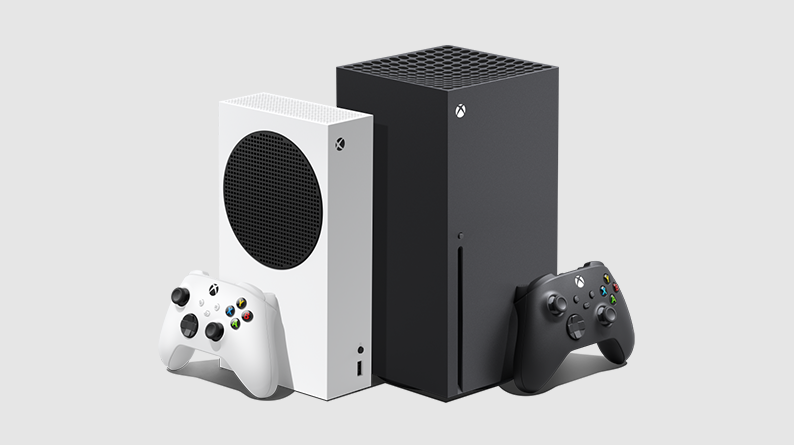 |
| Pictured: Xbox Series S and Series X. Microsoft offers the Series S console as a lower entry-cost alternative to the mainline Series X, but increasing console prices threaten to cripple the strategy, as even the cheaper console slips into a price range outside of a lower-income consumer's reach. (Image via Xbox.com) |
Consoles are generally already sold at barely a profit margin, as the bulk of the revenue is usually driven by software sales, and it benefits the business model to push the platform to the widest possible audience in order to maximize potential customers for the software. This means that increased costs in the supply chain or logistics make the sale of each unit risky for the manufacturer in the absence of guaranteed software sales to cover the cost.
Even if the tariffs only affect the United States specifically, it being one of the biggest markets for video games in the world, there's no escaping the fact that these companies will have to adjust their top-level strategies to compensate for the changes taking place in that one market.
The following consequences are straightforward to predict: higher entry cost means shrinking audiences, as buying a video game console has an increasing minimum financial status requirement. Shrinking audiences means smaller potential sales numbers for manufacturers, which in turn means less revenue, but it also has the secondary effect of throttling viability projections for third-party publishers and developers: the companies outside console manufacturers that finance game development will be keenly aware of the increasing risk and sapped profit potential of game development, and that will mean greater aversion to risk as well as smaller investments. Developers will also be affected, as they're under greater pressure to develop games that will generate income to cover the cost of development time. Outside-the-box ideas will be riskier, which can limit creative experimentation.
That all may sound like catastrophizing, but it's really just a simplified estimate of how economic change tends to affect industries in real life. I'm not arguing that Trump's tariffs will mean a sudden death of creative variety and squeeze the life out of the game industry, but I think it's not a wild prediction to say that that's likely going to be the general direction for a little while. It's also good to remember that I'm specifically talking about conventional game development and publishing as it happens in formalized businesses.
The number of indie and hobbyist game developers is currently likely the highest it has ever been. Tools for various types of development or segments of development are of high quality and available for free or nearly free for everyone with access to the internet. Even when they weren't, these hobbyists developing games in their bedrooms on a regular home PC were finding ways to do it already decades ago. We've seen cases in the past where the industry was struggling either creatively or economically, and small teams or solo developers managed to break through with ideas and practices that the industry at large needed but was too big to realize - in conventional business, a set course is slow to change, and nearly impossible if there's no precedent to follow. Even if the economy gets worse and formal game development industry is crippled, that only means that the small developers are in a position of great power and opportunity, to break through and set a new course.
 |
| Pictured: "Hollow Knight: Silk Song". Games made outside the conventional AAA-publisher ecosystem frequently make ripples in the video game market, sometimes demanding attention over games with multiple times the production and marketing budget. (Image via hollowknightsilksong.com) |
In fact, perhaps that will end up being the best thing to happen to the industry overall. It's not a view shared by everyone universally, but I've personally felt like the industry (particularly when it comes to the bigger publishers and developers) has been bloated and buckling under its own weight for many years now. New games released by big companies often have unreasonable sales expectations (something Square Enix in particular has made a habit of), and excessive budgets are being poured into making games bigger and more visually cutting-edge, while the core processes of making a game fun and engaging often appear to struggle. Publishers are enticed by the potential of massive profit in live service games, seemingly fooled by survivorship bias into forgetting how low the percentage of actually profitable live service games is. Development teams are often huge, because of the technical requirements of a project whose ambition feels to be more about marketing value than what the game actually needs to deliver on its promise to the end user.
This is something I've been thinking about since the industry started going up from $60 to $70 as the standard retail price of new game releases. Developers often commented that game development is expensive and the cost must be recouped in the sale, but I always thought there was a second, quite obvious option: make the game cheaper. Anyone who's a fan of genre movies from the 70s and 80s, or indie games from throughout the history of game development, knows that nothing feeds creativity quite like limitations: when you can't just solve a problem with money, you have to be clever and figure out ways around it. It's easy to think of things to spend money on, but when you need to cut everything that's not absolutely necessary, you distil the concept down to what actually matters, and you'll likely stop at nothing to execute on those elements.
Now, there's an obvious downside to all of this: even if we accept that we won't be getting massively expensive games anymore, deflating the game development industry will mean countless jobs lost. That's already happening - in the last couple of years, we've seen news of big game developers across the globe laying off a total of thousands of people. As someone who believes in collective responsibility and taking care of people, I'm not happy to admit I don't have a solution ready to go for that: if the industry is to reset to a more healthy scale, it seems to inevitably come at the price of a massive number of talented people losing their employment.
This is, however, a bigger question than the entirety of the video game industry - layoffs and worsening employment prospects are an immensely difficult question not just economically, but ethically as well. That also works as a good reminder that video games are just a tiny fragment of the overall landscape we're currently looking at in the world; even when we're intentionally focusing on this area of personal interest, it's good to not become so myopic as to think these global changes only affect video games, or that the video game industry's plight is somehow separate from how other industries and communities are affected by the same - and sometimes also other - events in the world.
If there is a conclusion to draw from this meditation on the industry, I'd propose it to be that there will be changes particularly in the direction of the big actors in the market: hardware manufacturers and large publishers will adjust their courses from what they might have been 5 years ago, and they already are. Increases in console prices might be as far as it goes, though I personally don't believe it will end there - I'd expect there to be greater shifts in how the industry operates.
And like I mentioned above, if that happens, the next several years will be a great time of opportunity for small and new developers not bound by the conventions of the video game business. Maybe the industry is unraveling, but that could be just what game development at large needs right now.

Comments
Post a Comment